In short
- Pre Rup features a taller 12-meter pyramid structure and is popular for sunset.
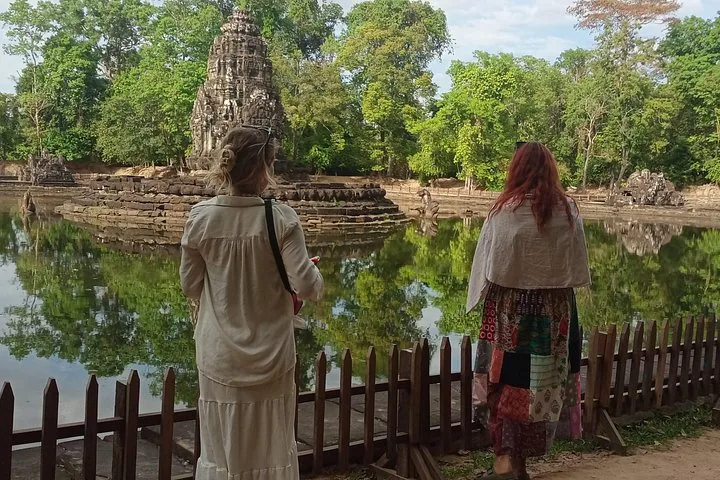
- East Mebon sits 1.3 kilometers north and features iconic stone elephant statues.
- Both temples share a similar architectural style and require the standard Angkor Pass.
In this article
These two ancient structures sit just 1.3 kilometers apart on a shared north-south axis along the Grand Circuit. Built around the same era, they provide a fascinating look at 10th-century Khmer architecture. Choosing which to prioritize depends on what you want to see most.
What is the main difference between Pre Rup and East Mebon?
The main difference is their physical height and defining features.
Pre Rup is a towering temple-mountain rising 12 meters high. It is famously bathed in warm light at sunset. East Mebon has a shorter structure. It is best known for the large stone elephant statues standing at its corners.
Why should you visit Pre Rup?
You should visit Pre Rup to climb its steep stairs and watch the sunset.
The temple features a three-tiered pyramid layout made of laterite and brick. The upper platform holds five central brick towers arranged in a quincunx pattern. Late afternoon light turns the brick towers a fiery red color.
Why should you visit East Mebon?
You should visit East Mebon to see its well-preserved stone animal statues.
This 10th-century temple is most famous for the large stone elephants guarding its corners. Because it lacks a towering 12-meter pyramid like Pre Rup, it requires less climbing.
Can you see both temples on the same day?
Yes, you can easily visit both temples on a standard Grand Circuit route.
The two structures sit close together. Most full-day transport options and guided tours stop at both sites. A typical visit to Pre Rup takes 30 to 45 minutes.

Do both temples require an entrance ticket?
Yes, you need a valid Angkor Pass to enter both sites.
There are no individual tickets for these temples. A one-day Angkor Pass costs $37. You must carry this pass at all times and show it upon request.
How do you travel between them?
You can hire a tuk-tuk, rent a car, or ride a bicycle between the temples.
Chartering a tuk-tuk for the Grand Circuit route costs $20 to $25 per day. A private car with air-conditioning costs $35 to $50 per day. Bicycles rent for $2 to $5 per day in Siem Reap.
Questions travellers ask
Which temple is taller?
Pre Rup is the taller temple. Its central structure is a three-tiered pyramid rising 12 meters high.
Which temple is better for sunset?
Pre Rup is celebrated as a prime spot for sunset viewing. The late afternoon light gives its bricks a warm, fiery glow.
Who built these temples?
Both temples were built by Khmer King Rajendravarman II. Pre Rup was consecrated in 961 CE as his state temple.